
5 Elements of a Healthy Diet
Good nutrition is important for all of us, but probably even more so for anyone living with cancer. Whether you are currently undergoing treatment or not, your body needs the right fuel to maintain its strength and decrease side effects.
Simply eating less obviously unhealthy food and more fruit and veg and drinking more water will be beneficial for practically all of us. Cancer and cancer treatment can reduce your appetite, so don’t worry if your diet is not perfect every day, just do what you can. Don’t deny yourself the occasional treat either!
If you are keen to make sure you are doing everything you can to look after yourself, here is our advice.
There are 5 key elements to a healthy diet:
-Water
-Protein
-Fibre
-Colour
-Fat
We’ll go through each one in turn.

1. Water
Did you know that we are 70% water? 90% of your blood is water. 90% of your brain is water! Fluid is a really important part of a healthy diet. Dehydration can have a variety of side effects, so it’s really important to drink enough fluid.
Most of us don’t drink enough. A good guideline is 2 litres per day, but different people will need different amounts. Your pee will tell you if you are drinking enough, it should be almost clear. If it’s darker, then you need more fluid.
Fluid helps us to digest our food, to form stools and helps to remove toxins from our bodies. (Drinking too much can dilute nutrients in food before they are digested, but most of us are drinking too little rather than too much.)
The side effects of dehydration are; headaches, fatigue, hunger, dizziness, confusion, poor concentration, reduced energy.
So what should you do?
If you are eating lots of fruit and vegetables, you’ll probably get about 30% of the fluid that you need from food. That still leaves quite a bit that you need to drink though! Tap water is the easiest and cheapest option. Herbal teas and fruits teas are great. The odd glass of fruit juice or squash is fine, but don’t have too much because of the high sugar content.
Tea and coffee will give you some fluid, but caffeine isn’t that good for you, so try not to have more than 3 or 4 caffeinated drinks per day.

2. Protein
Proteins are the building blocks of life. Every cell in our body needs protein. Our muscles, our skin and our bones all need protein. Protein is the part of a healthy diet that will make us feel full and stop us feeling hungry again too quickly. How much protein do we need and where should we get it from?
Most of us need about 1g of protein for each kilogram of body weight. If you weigh 10stone, that means you need about 63g of protein every day. An egg would give you 13g and a cup of chickpeas 39g.
Many of us associate red meat with protein, but chicken actually has more protein and you don’t need meat at all to get your protein requirements. Most of us already eat enough protein, so you may find it’s more important to think about getting protein from healthy sources rather than trying to eat more protein.
Protein rich foods include:
- Eggs – an omelette is a great breakfast or lunch, and you could make it with tomatoes, pepper, spinach or whatever takes your fancy.
- Milk – a milk based fruit smoothie is nice if you don’t fancy a glass of milk.
- Yogurt – there are lots of yogurts that are labelled as being high in protein, but keep an eye on the sugar content as well.
- Fish and seafood – salmon is particularly good as it also contains omega 3 fatty acids.
- Chicken and turkey – a nice stir fry would give you some veg as well.
- Soya – really useful if you are dairy intolerant.
- Nuts and seeds – great for a snack, but nuts can be high in fat.
- Beans and pulses – such as lentils and chickpeas. They are cheap, a useful source of iron, rich in fibre and easy to include in curries and soups.
3. Fibre
Most of us aren’t getting enough fibre. Fibre will fill you up and help to keep your gut healthy. Not forgetting that it will keep your bowels moving!
Keeping your gut bacteria happy by feeding them fibre will support your immune system – 70% of your immune system is in your gut.
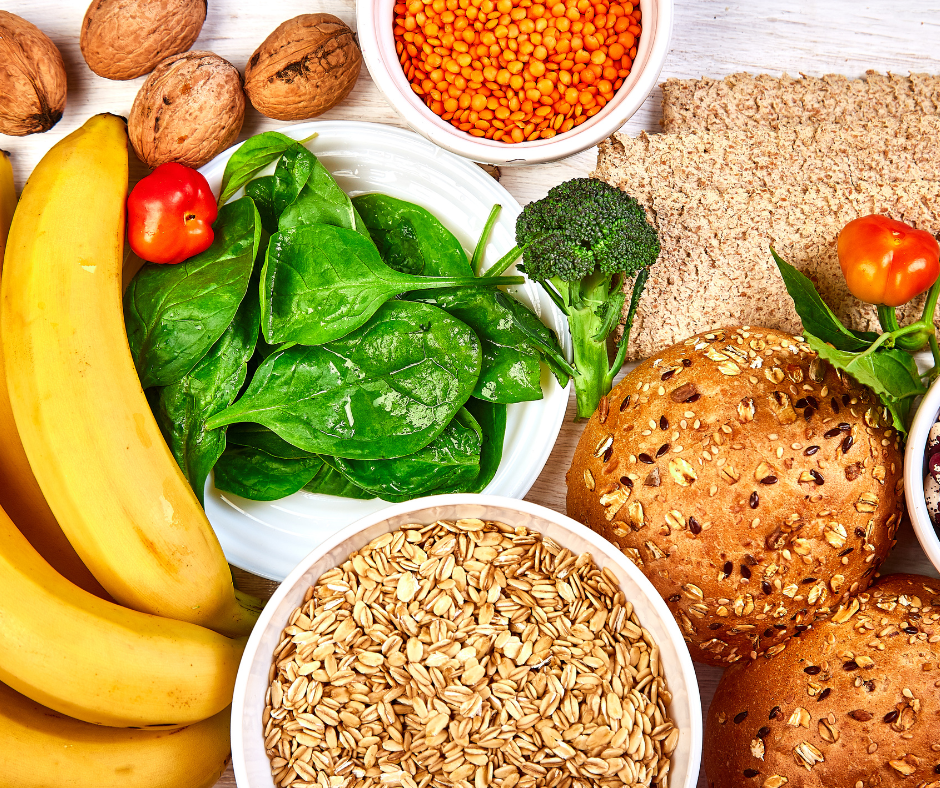
Many of us think of bran when we think about getting more fibre in our diets, but there are plenty of other options. A healthy diet with lots of fruits and vegetables (even better if you eat the skin) will give you the best balance. Here are some good options that are full of fibre:
- Basmati or brown rice have more fibre than white rice. Or try chickpea pasta or quinoa.
- Wholegrain or rye bread. If you love white bread, then sourdough is best.
- Add lentils to stews and casseroles. All beans and pulses are great for adding fibre to your diet and are easy to add to curries and soups.
- Nuts and seeds are full of fibre and good fats. Stick to small portions as they are high in calories.
If you want a quick, fibre rich snack, try these:
- Hummus with carrot or celery sticks
- Apple with walnuts
- Wholegrain toast with peanut butter and banana
- Dried apricots and almonds
Keep drinking lots of water and don’t suddenly go from a very low fibre diet to a high fibre diet, gradual changes will prevent any digestive issues.
4. Colour
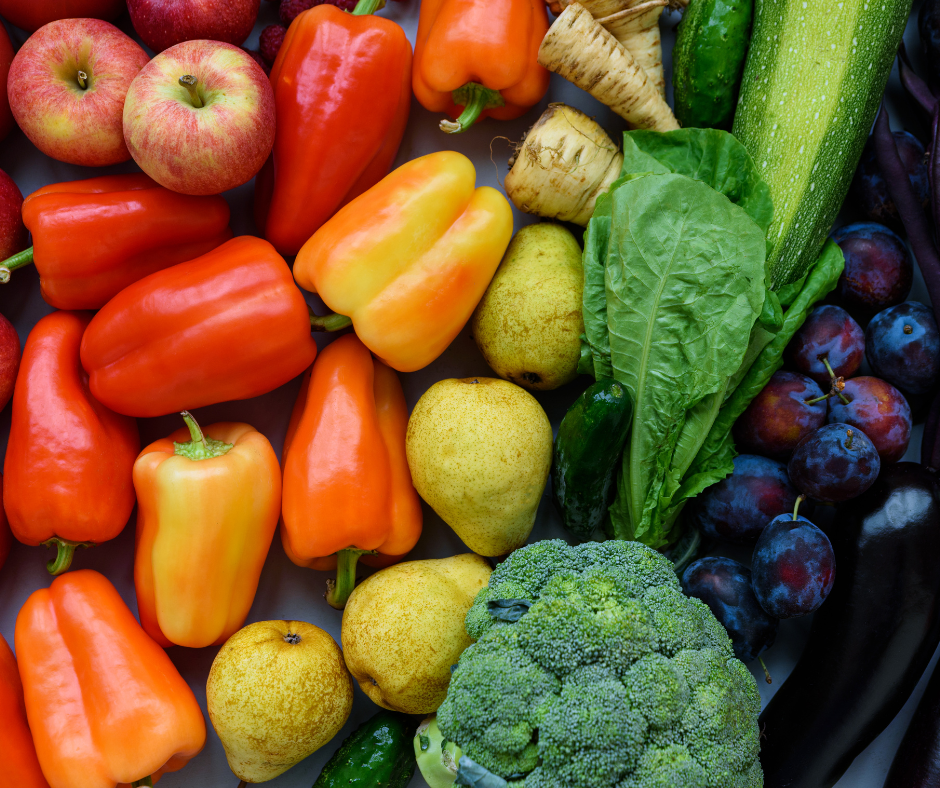
Colour is a key part of a healthy diet. Try to eat a range of differently coloured fruit and veg. You’ve probably heard that you should ‘eat a rainbow’.
Try these suggestion for some more colour in your diet:
- Red – Red fruit and veg are thought to be particularly useful to fight cancer, because they contain lycopene and ellagic acid. Eat more tomatoes (raw or tinned chopped tomatoes cooked in a sauce, or however you like them) and red berries.
- Orange and Yellow – carrots, oranges and peaches all have carotenoids, which your body will convert into vitamin A.
- Green – so many green things to chose from! Leafy green vegetables are rich in lutein and zeaxanthin which is good for your eyes.
- Blue/Purple – anthocyanins are what give blue and purple fruits and vegetables their colour, but they may also help to prevent cancer and dementia. Try blueberries, black grapes, plums, blackberries and aubergine.
And not forgetting white. White foods such as brazil nuts, eggs and mushrooms contain selenium, which can lower your risk of some cancers and of heart disease.

5. Fat
Fat is part of a healthy diet, but most of us are eating too much fat and the wrong type of fat.
Good fats will help our bodies to produce the hormones they need and reduce inflammation. Eating too much bad fat will increase your risk of heart disease and stroke. We only need a small amount of good fat as both good and bad fat is high in calories.
Never cut fat out of your diet all together, our bodies need some fat, but most of us should be trying to reduce the amount of fat we eat, particularly bad fat.
Bad fat is in:
- fatty cuts of meat
- butter and ghee
- cheese
- cream
- chocolate
- biscuits
- cakes
Bad fat is in many of the things that we would treat ourselves with, keep treating yourself, but not too often!
Try to eat more good fat, which can be found in:
- Olive Oil
- Avocados
- Nuts – almonds, Brazil nuts, peanuts
- Oily fish – salmon, mackerel, sardines, trout
Be careful of ‘lower fat’ labels. The product may have less fat than the standard version, but it could still be high in fat and the fat could have been replaced with sugar.
The key message is to eat a varied diet, with lots of fruit and veg. You don’t have to completely overhaul your diet all at once, start with gradual changes that are manageable for you.